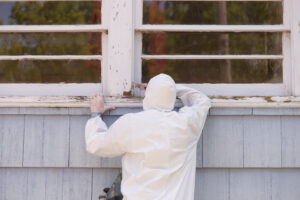
 Lead paint removal cost depends mostly on the method and the size of the area. Encapsulation, which seals lead paint under a special coating, typically runs about $1 to $4 per square foot. Full removal by stripping usually costs $8 to $17 per square foot, and whole-house projects can climb well into five figures once containment, disposal, and repainting are added.
Those numbers vary a lot from house to house, though. Here’s what actually drives the price on a Central New York home, and how to make sure the work is done safely.
How Much Does Lead Paint Removal Cost by Method?
There isn’t one “lead paint removal” price because there are several ways to deal with lead paint, and they cost very different amounts. National cost ranges by method look roughly like this:
| Method | What It Means | Typical Cost |
|---|---|---|
| Encapsulation | Sealing intact lead paint under a bonding coating | $1 to $4 per sq. ft. |
| Enclosure | Covering surfaces with new drywall, siding, or panels | $6 to $12 per sq. ft. |
| Removal (stripping) | Chemically or mechanically taking paint off down to the substrate | $8 to $17 per sq. ft. |
| Component replacement | Swapping out painted windows, doors, or trim entirely | $1,000 to $15,000 per project |
Disposal adds to the total, since lead-contaminated debris has to be bagged and handled properly. Treat these as starting points. Your actual number depends on your house.
What Affects Lead Paint Removal Cost?
The biggest cost factors are scope, containment, and disposal, followed by access and the condition of the surfaces underneath. A single room of window trim and a full exterior on a three-story home are completely different jobs.
- Square footage and number of surfaces. More area means more labor, more materials, and more waste.
- Interior vs. exterior. Exterior work often needs ground-level containment to keep chips out of the soil, and taller homes need more ladder or lift time.
- Containment. Plastic sheeting, sealed work areas, and HEPA cleanup take time to set up and break down, especially in an occupied home.
- Condition of the paint. Peeling, flaking paint takes more work to stabilize than intact paint that just needs sealing.
- Disposal. Lead debris has to be collected and disposed of correctly, which adds handling time and cost.
- Repairs underneath. Stripping often uncovers rot, damaged plaster, or drywall issues that need fixing before new paint goes on. See drywall repair before painting for what that usually involves.
Lead Abatement vs. Lead-Safe Painting: What’s the Difference?
This is the distinction that matters most for your budget. Lead abatement is work designed to permanently eliminate lead hazards, and it has to be done by certified abatement professionals. Lead-safe renovation and painting is ordinary repainting or repair done with specific precautions so that disturbing old paint doesn’t spread lead dust.
Most homeowners repainting an older house aren’t hiring for abatement. They need prep and painting done the right way: wet scraping instead of dry sanding, containment, careful cleanup, and a solid new coating over stabilized surfaces. That’s typically far less expensive than full removal.
Full abatement usually comes into play when a child has an elevated blood lead level, when a local health department orders it, or when an owner wants lead gone for good, often before a sale or major renovation. If that’s your situation, the HUD lead-based paint resources are a good place to start.
What Does an EPA RRP-Compliant Process Look Like?
The EPA’s Renovation, Repair and Painting (RRP) Rule requires anyone paid to disturb paint in pre-1978 homes to be certified and to follow lead-safe work practices. On a typical job, that process looks like this:
- Test or assume. Confirm whether lead is present, or treat the surfaces as if it is.
- Set up containment. Cover floors and furniture, seal off the work area, and lay plastic on the ground outside.
- Prep without spreading dust. Mist surfaces and scrape by hand. Open-flame burning and power sanding without HEPA dust collection are prohibited.
- Clean up thoroughly. HEPA vacuum and wet-wipe every surface in the work area.
- Verify the cleanup. Check that the area is clean before the containment comes down.
- Prime and paint. Seal the stabilized surfaces with quality primer and paint so old layers stay put.
Every one of those steps takes time, which is why a lead-safe repaint usually costs more than a standard repaint of the same size. You’re paying for containment and cleanup, not just paint.
Why Does Hiring a Certified Painter Matter?
Cutting corners on lead work doesn’t save money. It moves the cost somewhere else. Dry sanding a pre-1978 window frame can leave lead dust in carpets, heating ducts, and the soil where kids play, and cleaning that up later costs far more than doing it right the first time.
Before hiring anyone for work on an older home, ask for proof of EPA Lead-Safe (RRP) firm certification, a written scope that explains containment and cleanup, and a straight answer about whether the job is lead-safe painting or something that needs an abatement contractor. For the broader hiring picture, the post on questions to ask before hiring house painters covers the rest of the vetting checklist.
Many Syracuse-area homes are old enough that this comes up regularly, and Central New York weather is hard on old exterior paint. Freeze-thaw cycles crack and lift aged layers, which is often what turns intact lead paint into a peeling hazard in the first place.
Key Takeaways
- Lead paint removal cost ranges from about $1 per square foot for encapsulation to $17 per square foot for full stripping.
- Scope, containment, disposal, and repairs underneath are the biggest cost drivers.
- Most homeowners need lead-safe painting, not full abatement, and the price difference is significant.
- EPA RRP rules require certification and specific work practices for paid work on pre-1978 homes.
- Ask any contractor for RRP certification and a written plan for containment and cleanup.
FAQ
Is encapsulation as safe as removing lead paint?
Encapsulation can be effective on paint that’s still in good shape, as long as the coating stays intact. It isn’t a fit for badly deteriorated paint or friction surfaces like window sashes, where removal or replacement may make more sense.
Can I remove lead paint myself?
The EPA advises against removing lead paint yourself. If you must sand a small damaged area, wet it first, sand only what’s necessary, and clean up thoroughly.
Does homeowners insurance cover lead paint removal?
Usually not, since it’s treated as maintenance rather than sudden damage. Check with your insurer, and look into local grant programs if you qualify.
How long does lead-safe painting take compared to a regular repaint?
Plan for extra time. Setting up containment and doing the required cleanup adds hours to each work area, depending on the size of the job.
Not sure whether your older home needs lead-safe painting or something more? Mike will look at the surfaces, talk through testing, and give you a straightforward, safety-first estimate. Request your free estimate here.