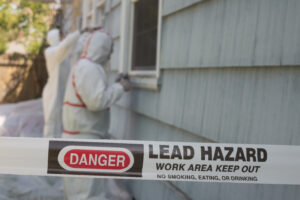
 If your home was built before 1978, lead paint testing should happen before anyone starts scraping, sanding, or prepping for a repaint. Lead-based paint was banned for residential use that year, and older layers are often still sitting under newer coats. Testing tells you what’s actually on your walls and trim, so the prep work can be planned around it instead of guessed at.
A lot of Central New York homes fall into that pre-1978 window, which is why this question comes up so often at Affordable Painting & More estimates. Here’s what homeowners should know before the painting starts.
Why Does Lead Paint Testing Matter Before a Repaint?
Lead paint testing matters because painting prep is exactly the kind of work that turns old lead paint into a hazard. Paint that’s intact and sealed under newer coats isn’t the main concern. The problem starts when it gets scraped, sanded, or chipped, which releases fine dust that settles on floors, windowsills, and soil around the house.
The EPA notes that renovation, repair, or painting that disturbs painted surfaces in older buildings can create large amounts of lead dust, and that even small projects can pose risks. Young children are the biggest concern, since lead exposure can affect development, and kids are more likely to touch dusty surfaces and put their hands in their mouths.
That doesn’t mean every old house is dangerous to paint. It means prep should be planned with the right precautions once you know what’s there.
How Likely Is Lead Paint in an Older Home?
The older the house, the higher the odds. According to the EPA, homes built before 1940 are the most likely to contain lead-based paint, and the share drops for each era after that:
| Year Built | Homes Likely to Contain Lead-Based Paint |
|---|---|
| Before 1940 | 87% |
| 1940–1959 | 69% |
| 1960–1977 | 24% |
The places it most often turns up are the surfaces that take the most wear: window sashes and sills, doors and door frames, stair railings, porches, and exterior trim and siding. Those also happen to be the spots that need the most scraping and sanding during a repaint, which is why they’re worth testing first.
What Are Your Lead Paint Testing Options?
Homeowners generally have three ways to find out whether lead paint is present, and each answers a slightly different question:
- Lead-based paint inspection. A certified inspector checks painted surfaces throughout the home, often using a portable XRF analyzer, and reports which surfaces contain lead. This is the most complete answer to “where is it?”
- Risk assessment. A certified risk assessor looks for active hazards, such as peeling paint, lead dust, or contaminated soil, and recommends how to address them. This answers “is it causing a problem right now?”
- EPA-recognized test kits. Quick chemical swab kits can check individual surfaces. They’re useful for a spot check on the specific areas being painted, but they don’t replace a full inspection.
The EPA also points out a fourth option: simply assume an older home has lead paint and treat the work accordingly. For a small repaint on a pre-1978 house, that’s often a practical starting point.
What Does Lead Paint Testing Cost?
A professional lead-based paint inspection typically costs a few hundred dollars, while a full risk assessment usually runs higher because it includes dust and soil sampling. Swab test kits cost much less but only check one spot at a time.
For households in Syracuse and Onondaga County with young children, local programs may help. The City of Syracuse lists contacts for the Onondaga County Health Department’s lead poisoning prevention program, which offers inspections and child blood testing, along with grant programs for qualifying homes. It’s worth a call before paying out of pocket.
What Should You Ask a Painter Before Work Starts on a Pre-1978 Home?
Federal rules put real requirements on contractors who disturb paint in older homes. Under the EPA’s Renovation, Repair and Painting (RRP) Rule, anyone paid to disturb painted surfaces in pre-1978 housing has to be certified in lead-safe work practices. Before hiring, ask:
- Are you EPA Lead-Safe (RRP) certified? Ask to see the firm certification, not just a verbal yes.
- Do you plan to test, or treat the surfaces as if they contain lead? Either can be appropriate, but the plan should be clear before prep begins.
- How will you contain dust? Look for plastic sheeting, wet scraping, and HEPA vacuum cleanup rather than dry sanding and a shop vac.
- What happens if testing comes back positive on a large area? Some work goes beyond painting and needs a certified abatement contractor. A good painter will tell you that up front.
Good prep is what makes paint last, and on an older home, safe prep is part of good prep. The post on surface prep for painting walks through what the rest of that process looks like.
Does Central New York’s Climate Make a Difference?
It does. Freeze-thaw cycles and wet springs are hard on exterior paint, and older paint that’s cracking, flaking, or chalking is more likely to shed chips into the soil around the foundation. That’s one reason exterior repaints on older homes deserve extra care here: the same weather that makes repainting necessary is what breaks down old layers in the first place.
Indoors, friction surfaces like double-hung windows grind old paint every time they open and close. If an older home has original windows, that’s usually the first place worth checking.
Key Takeaways
- Any home built before 1978 may have lead-based paint, and the odds climb sharply for homes built before 1940.
- The main risk comes from disturbing old paint during scraping and sanding, which is why testing belongs before prep starts.
- Options include a full inspection, a risk assessment, or EPA-recognized spot-test kits, each answering a different question.
- Local programs in Syracuse and Onondaga County may help qualifying households with young children.
- Any contractor disturbing paint in a pre-1978 home should be EPA RRP certified and able to explain their dust-control plan.
FAQ
Do I need lead paint testing if my house was built after 1978?
Generally no. Lead-based paint was banned for residential use in 1978, so newer homes are very unlikely to have it unless older materials were reused.
Can I just paint over lead paint?
Intact lead paint covered by newer coats is lower risk, but the prep work before painting is what creates dust. Any scraping or sanding on a pre-1978 home should follow lead-safe practices.
Are home lead test kits accurate?
EPA-recognized kits are useful for checking specific spots, but they test one surface at a time. A certified inspection gives a fuller picture of the whole home.
Who should do lead paint testing?
A certified lead-based paint inspector or risk assessor gives the most reliable results. In Onondaga County, the health department’s lead program is a good first call for families with young children.
Planning a repaint on an older home? Mike will walk through the house with you, point out the surfaces worth testing, and give you a clear estimate for the work. Request a free estimate here.